
Maintaining vintage vehicles is not all “big” items — sometimes its the small detail that counts. Recently, Lawrence Walker told me about working with the wheel nuts on our Hayes Teardrop.
So, the Hayes project continues to ramble along. As I said before, this project would take quite some time to complete. Lately things seem to have slowed down but we are still working every Sunday to get the job done. We have completed the repair to the front axle and steering system. Then we put the Hayes up on blocks to remove and inspect the wheels and brake drums; so far so good! So, most of the big heavy stuff is more or less done.
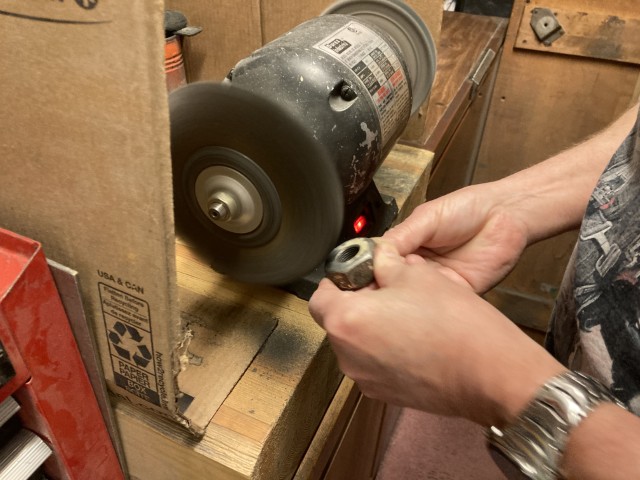
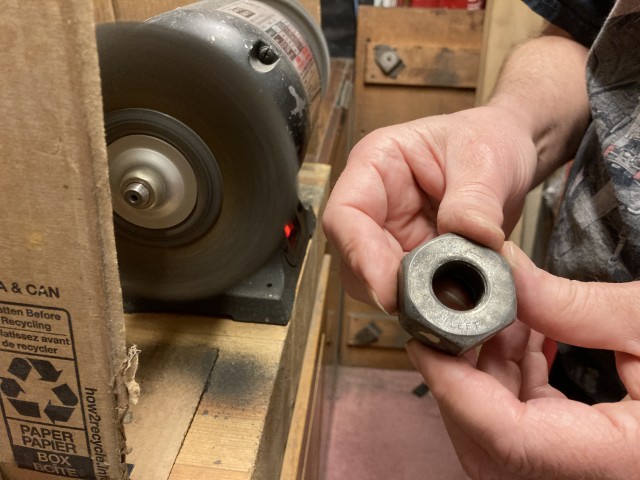
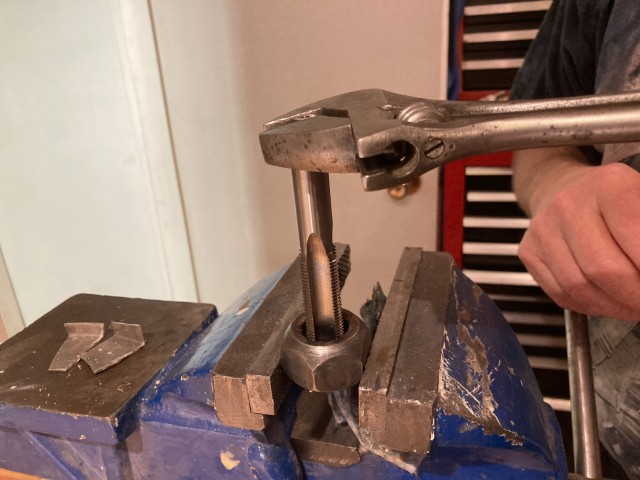
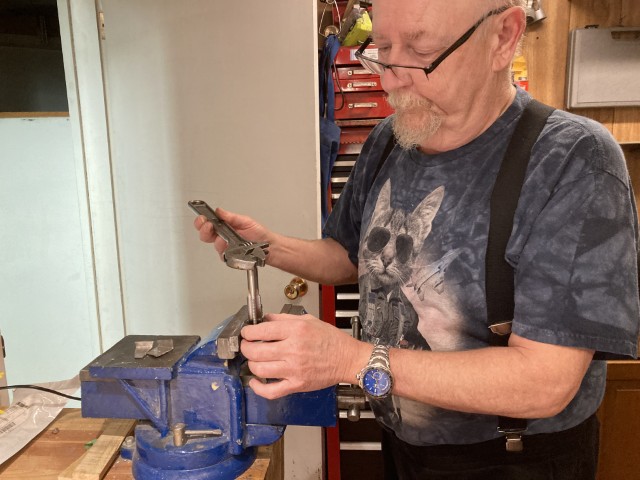
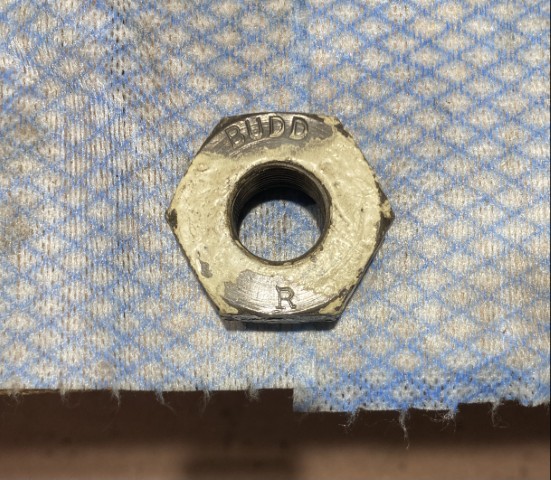
The re-wiring is coming along bit by bit. This gives me some much-needed time for what I call “general maintenance.” You know, all those little jobs that are just as important as the big stuff. Things like wheel bearings. There are two per wheel, and they must be completely cleaned of all old grease in the solvent tank. They are then inspected for scratches or pitting and, if they are good, repacked with grease if they are undamaged. That’s good for a couple of hours. Then there are the wheel nuts and studs….. all 89 years old. Just think of that now: over that time the nuts were put on and taken off at least once a week. Even discounting the Hayes being retired, that adds up to well over 2,000 on-and-off cycles so far. So as part of the wheel maintenance, I took about three hours per wheel to run a thread tap through each and every one of the ten nuts.
At first glance, spending hours running a tap through old wheel nuts might seem a little over the top. The goal wasn’t to cut new threads, but to clean and straighten the ones that were already there—removing decades of grime, corrosion, and microscopic damage. It makes the nuts go on smoothly, torque properly, and most importantly, reduces stress on the original studs. Could it have been skipped? Maybe. But with safety-critical parts and original hardware that can’t easily be replaced, it’s one of those jobs where taking the extra time now saves trouble later. Sometimes the boring, time-consuming work is what keeps old machinery safe, reliable, and rolling for another generation.
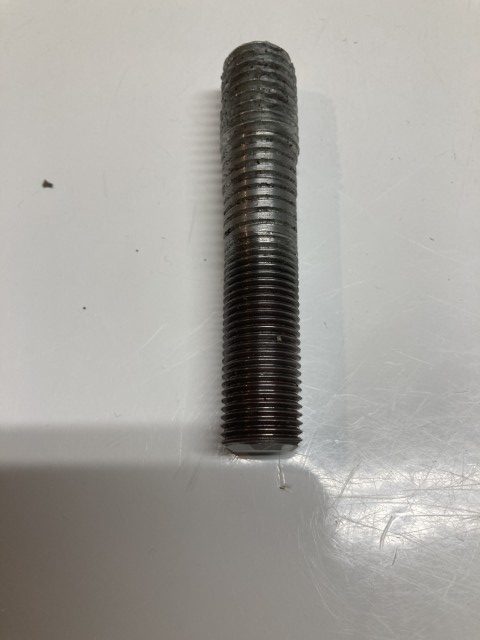
Back in the day, if they stripped the treads on a bolt hole, they would drill it out and rethread the hole bigger. For instance, from 1/2 inch to 9/16 inch, and use a bigger bolt. But in our case the bolt is a stud (like a bolt but threaded on both ends) and the axle won’t take a bigger bolt. So, what do you do? Something called a “Step-stud”, with 9/16 inch thread on one end and 1/2 inch on the other (shown at bottom right). Great idea! But there’s a problem. Since the invention of the “Heli-coil” tread repair kits, step-studs in in anything other than metric are no longer available. (A Heli‑Coil insert is basically a precision‑rolled stainless‑steel wire coil that forms a new internal thread when installed.) But never underestimate the cunning and treachery of and old mechanic to make his own! Thank you Bobb!!
Next will be an air system inspection and air line replacement. Then we’re going to change the polarity of the Hayes from positive ground to negative ground. That sounds more daunting a job than it is. And then fix the oil leaks… all the oil leaks. So, as I said before I started this project, it’s a big undertaking. But like all big undertakings it is just a bunch of little undertakings!
Lawrence Walker