Posted on

Community Catch-up (March/April)

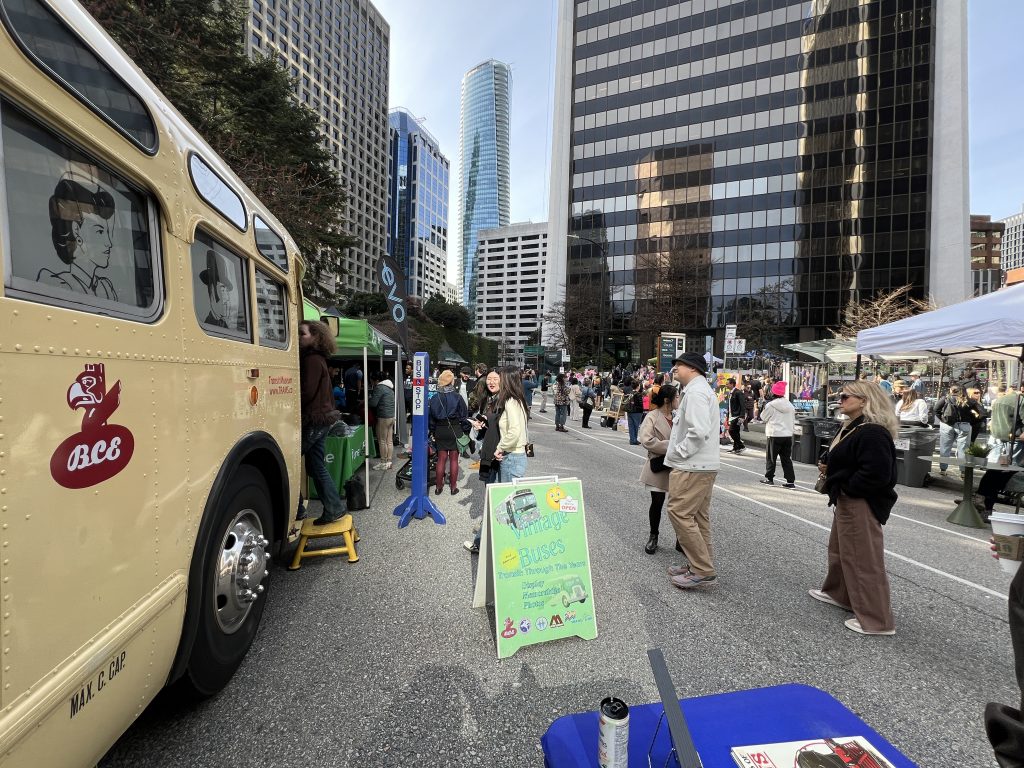
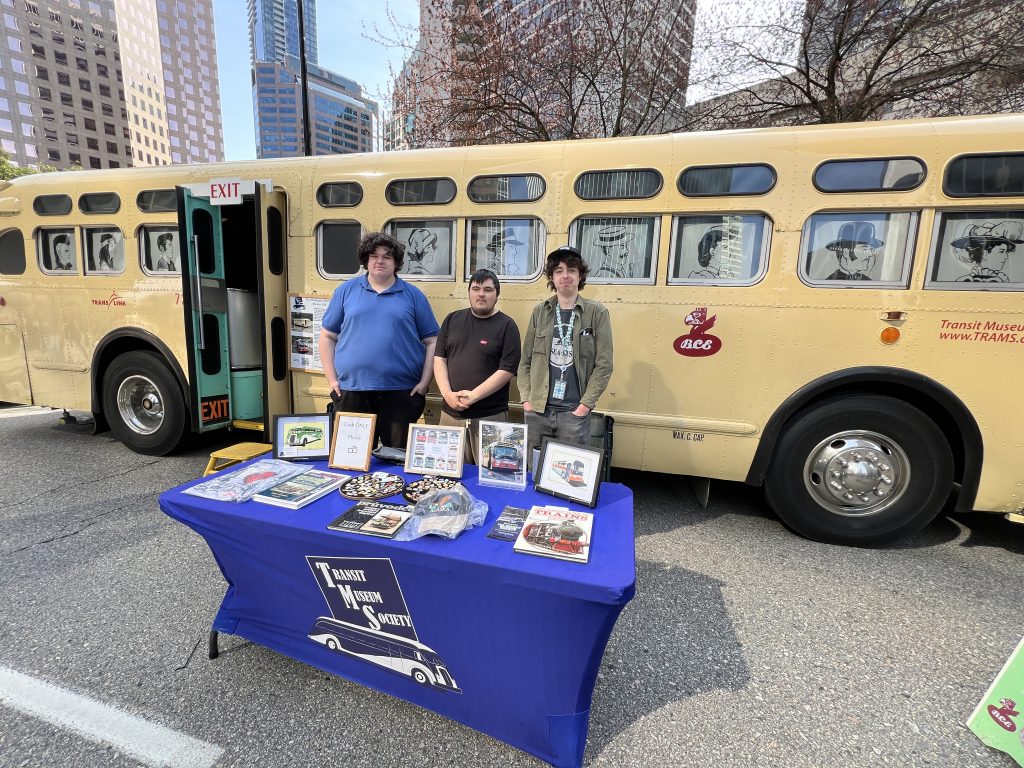
TMS, its buses and volunteers, were busy this past month. On the events front we attended the Blossom Block Party, held at the “Golden Triangle”. For those not familiar with the location, this is the area bounded by Burrard, Dunsmuir and Melville Streets. I believe that the term originated within BC Hydro planning and operations, referring to the high current load and high commercial value of the area. It was later adopted by the Transportation Department as a terminus even appearing (if I recall correctly) on destination signs.
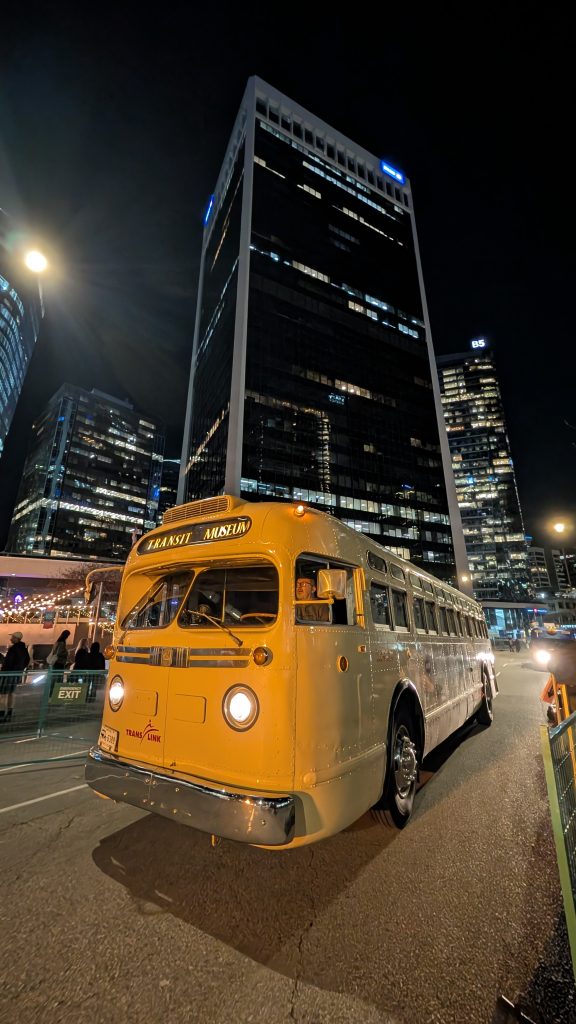


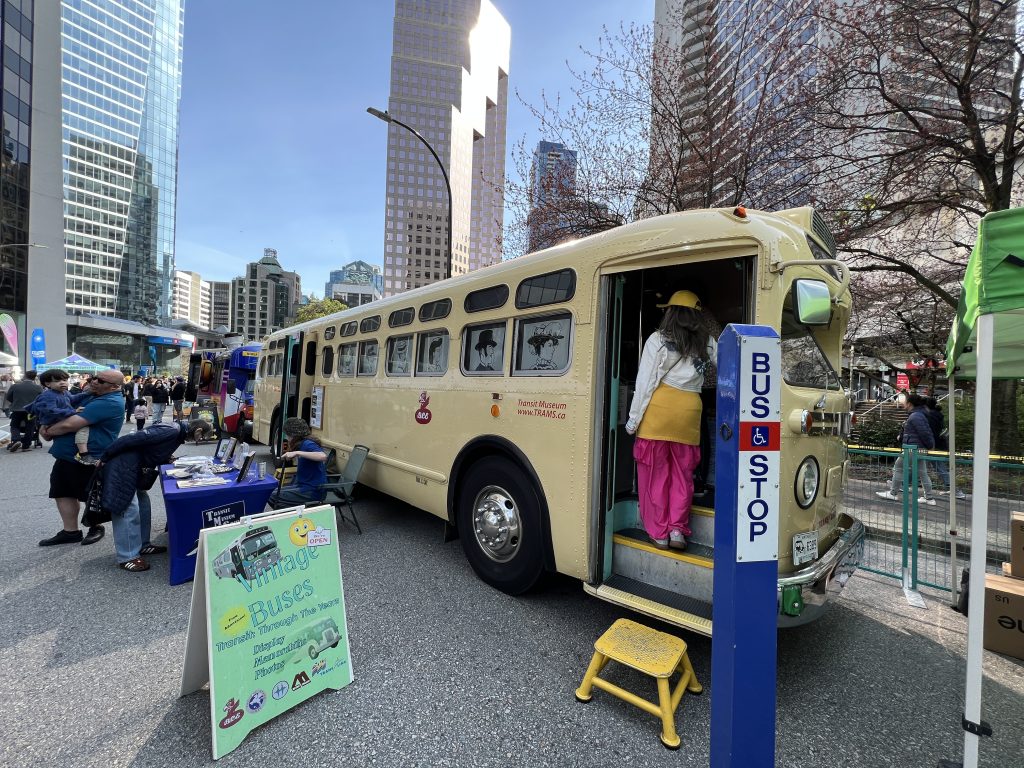
Anyway, on April 4, 2026 volunteers aboard #730 attended the Block party where there were live DJ and dance performances, pop‑up bar and food vendors, kids’ activities and games in the car-free streets.

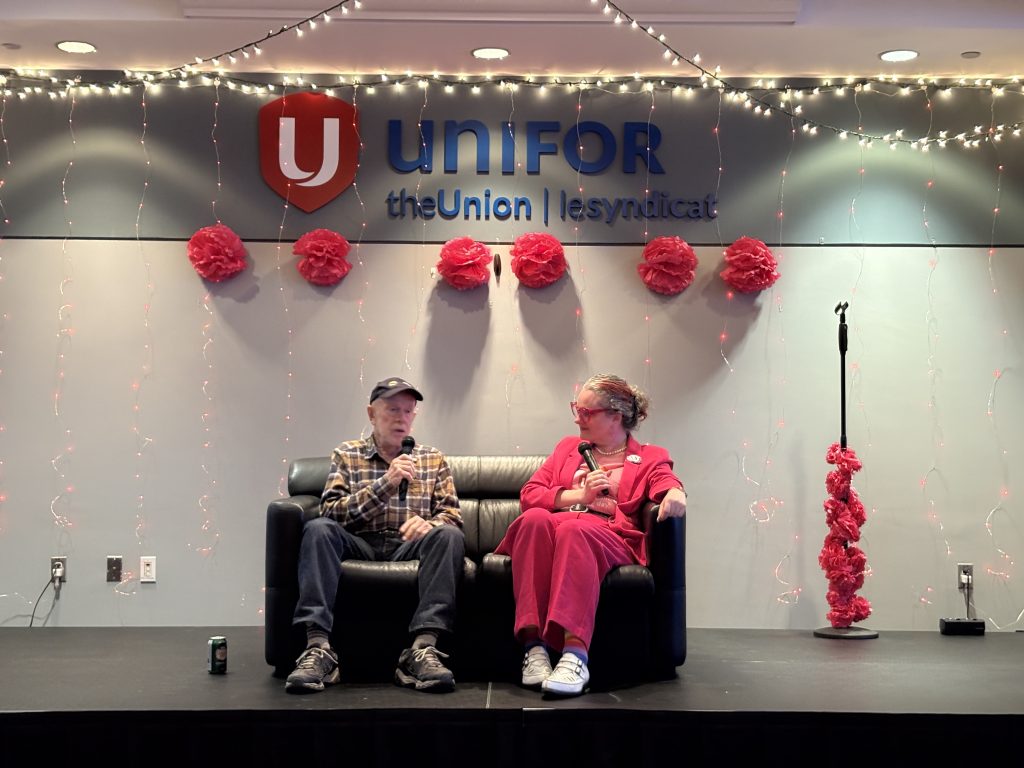
Then four days later, some volunteers attended the Day of Pink, on April 8th, as guests of Unifor Local 111 – the bus operator’s union. The Day of Pink is a Canadian anti‑bullying and anti‑discrimination event where people wear pink to stand against homophobia, transphobia, and all forms of bullying. This year was especially symbolic as it was the 25‑year anniversary of the passing of Canada’s landmark 2000 law — the Modernization of Benefits and Obligations Act (Bill C‑23) — which for the first time granted same‑sex couples equal federal benefits and obligations, marking a major turning point on the road to marriage equality.

(photo of 730 at Golden Triangle: Ewen Streit, below: Matthew Walker)
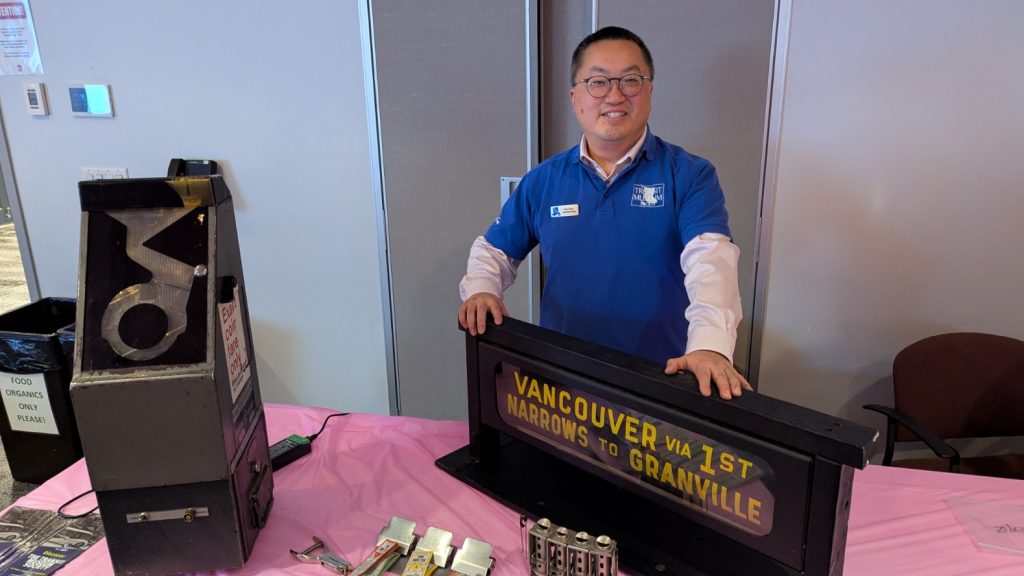
Rob Chew, Angus McIntyre and myself attended, bringing a Grant farebox and destination rool sign as “conversation starters” — which they were! Angus appeared onstage to recollect his early transit career as a gay bus operator.
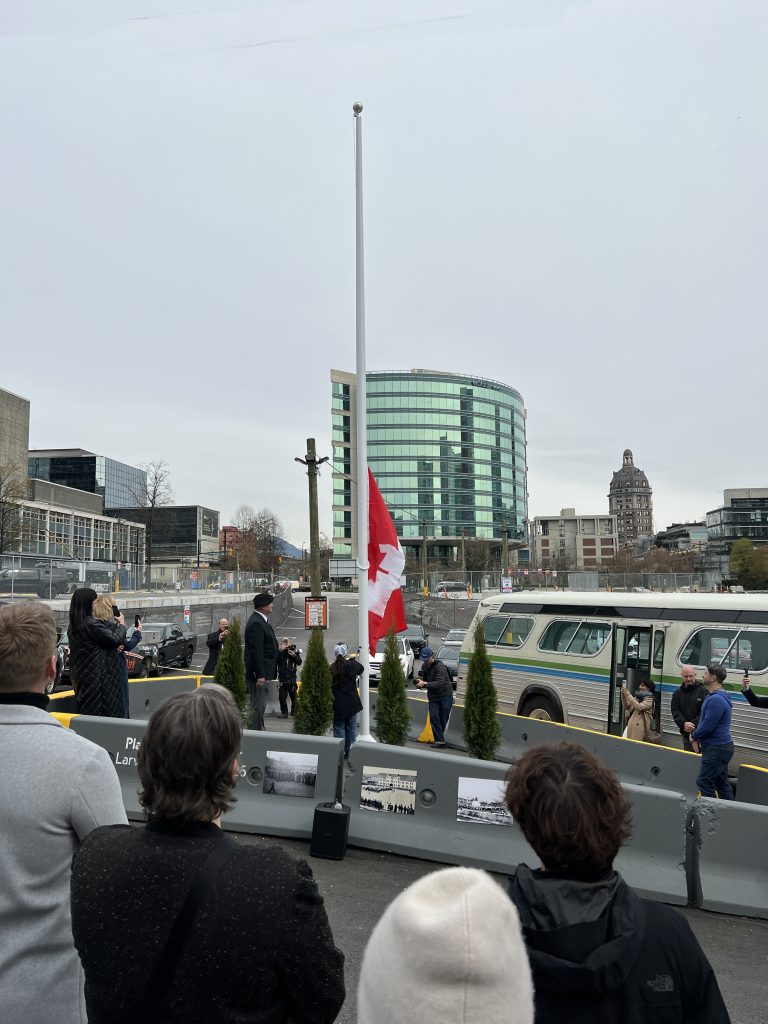
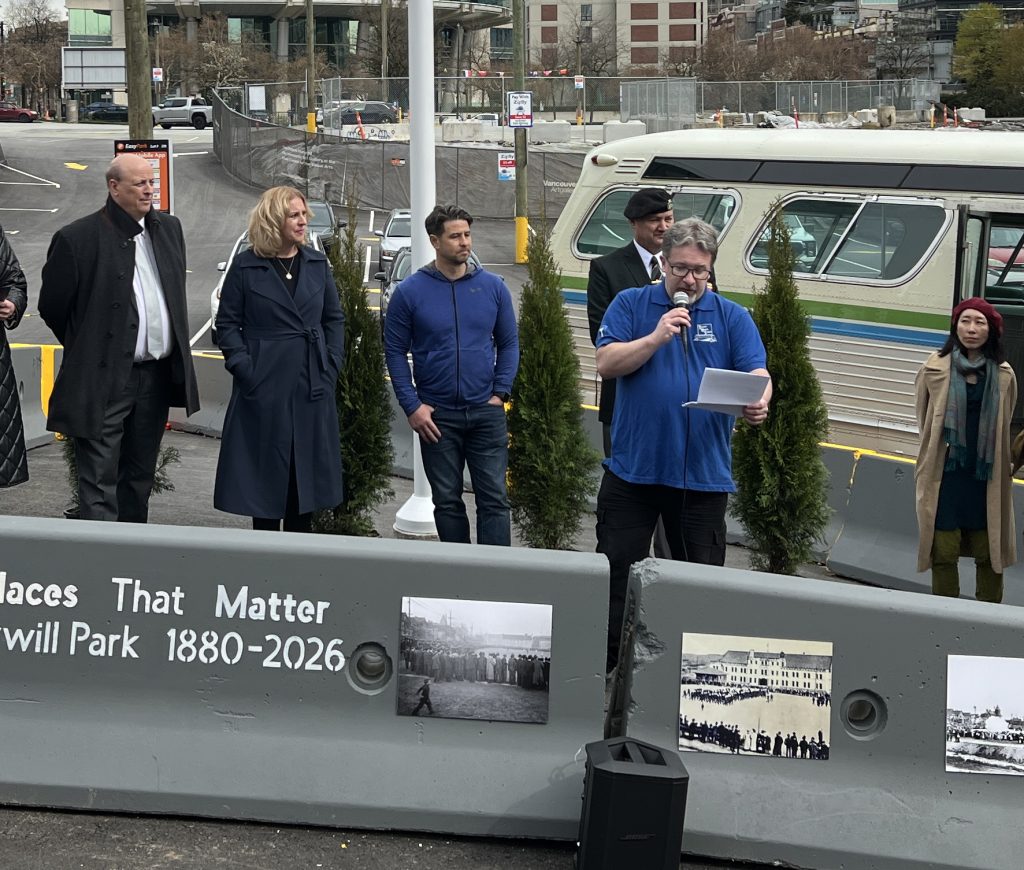
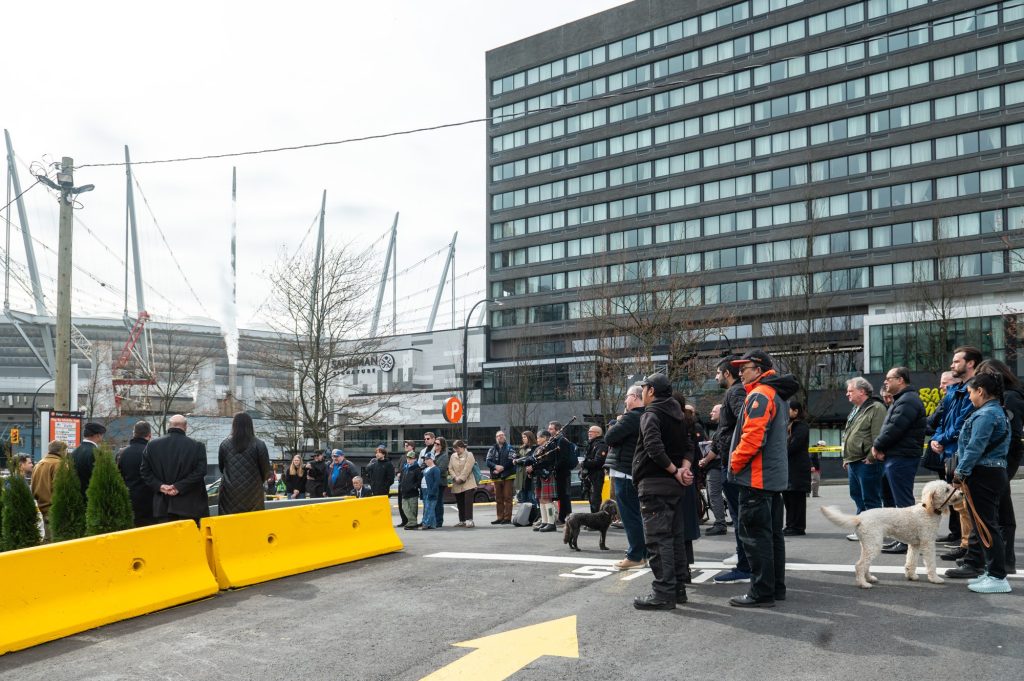
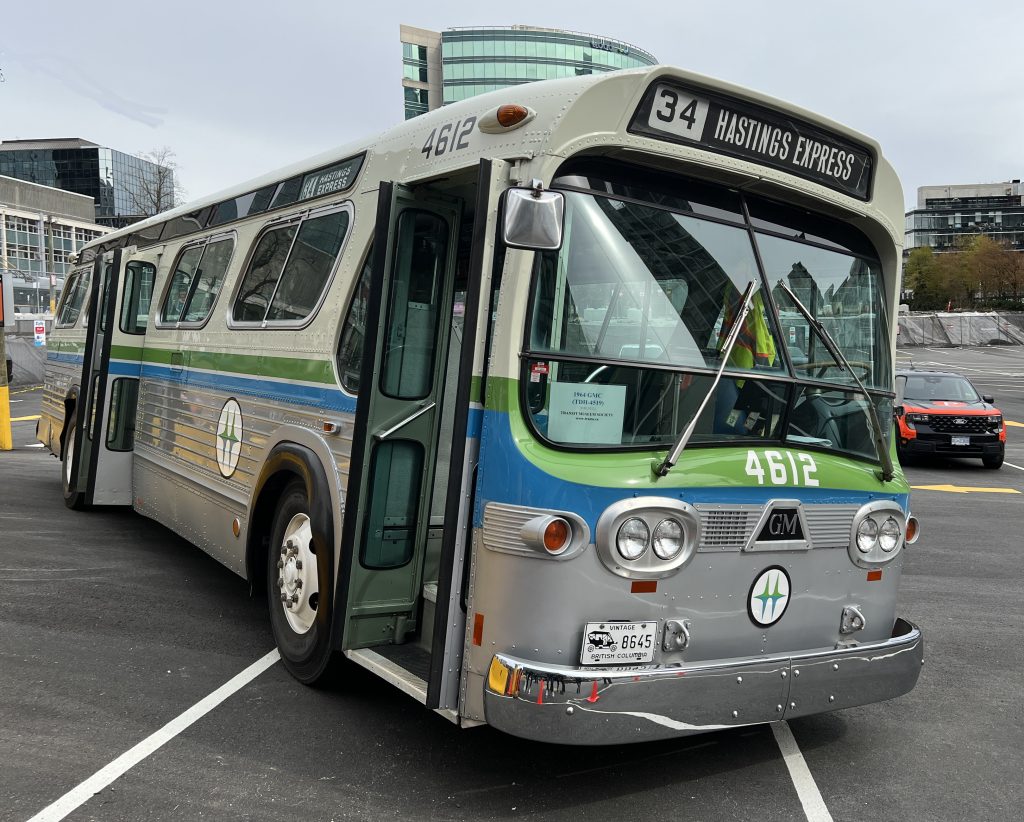
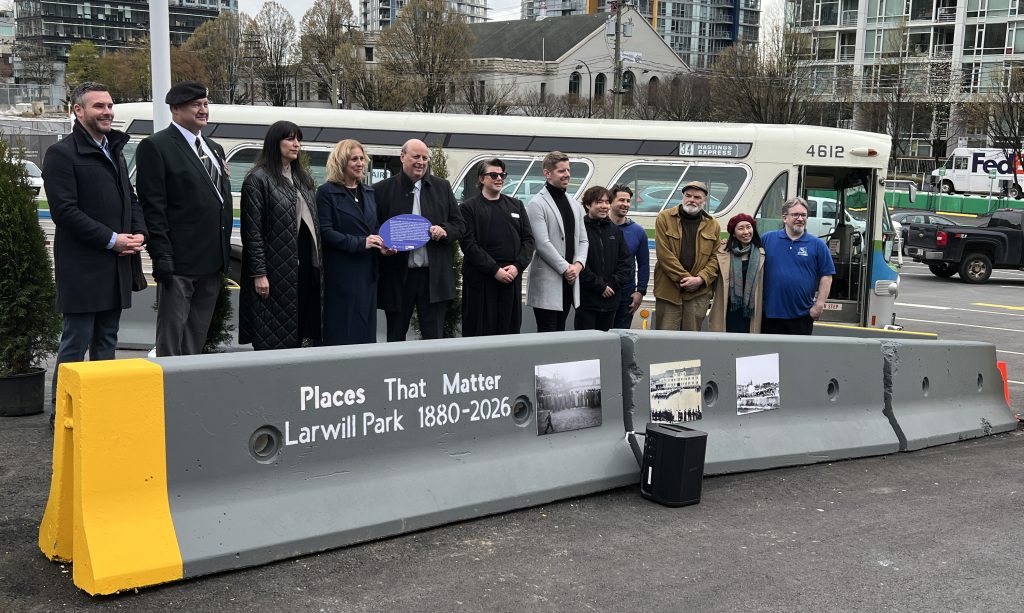
On March 27th, there was the Larwill Park Dedication of Places That Matter. This is a program of the Vancouver Heritage Foundation, recognizing the historical importance of noteworthy places in Vancouver. The program is unique in that sites are nominated by the community. Each receives a plaque. #98 was Larwill Park with its history spanning from the early 1890s as an athletic ground, the Military Parade Grounds, the Pacific Stage Lines bus station in the 1940s to the 1990s, and its future as the site of the Vancouver Art Gallery. Appropriately, when we were asked to attend the dedication, representing the bus depot era, we chose to take 4612. As a North Vancouver bus, it is quite likely it operated from there. Member Evan Russell, who drove the bus to the event also gave a short speech. (Photos: Matthew Walker)
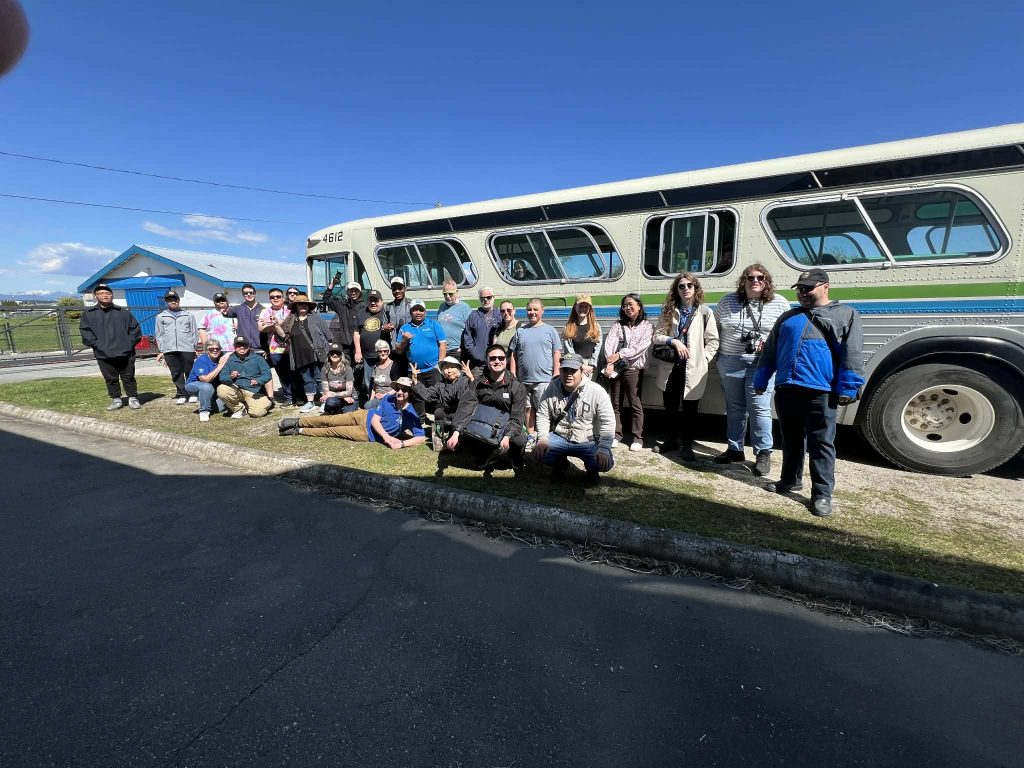
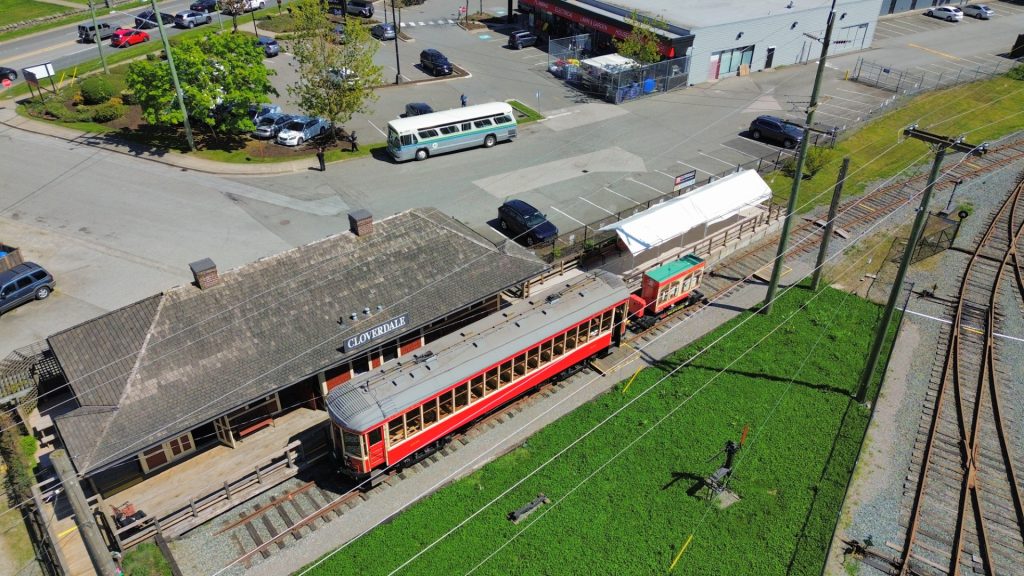
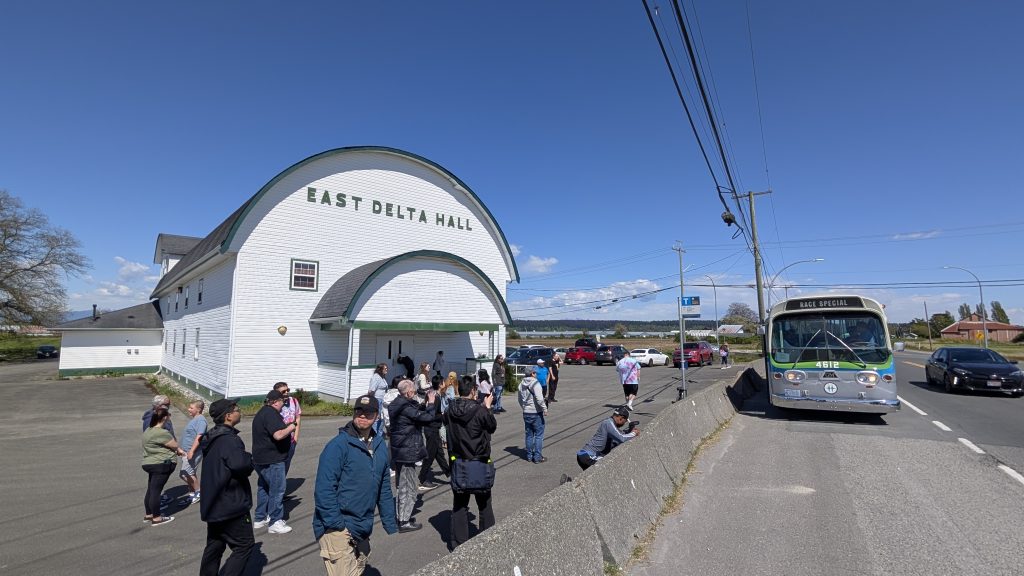
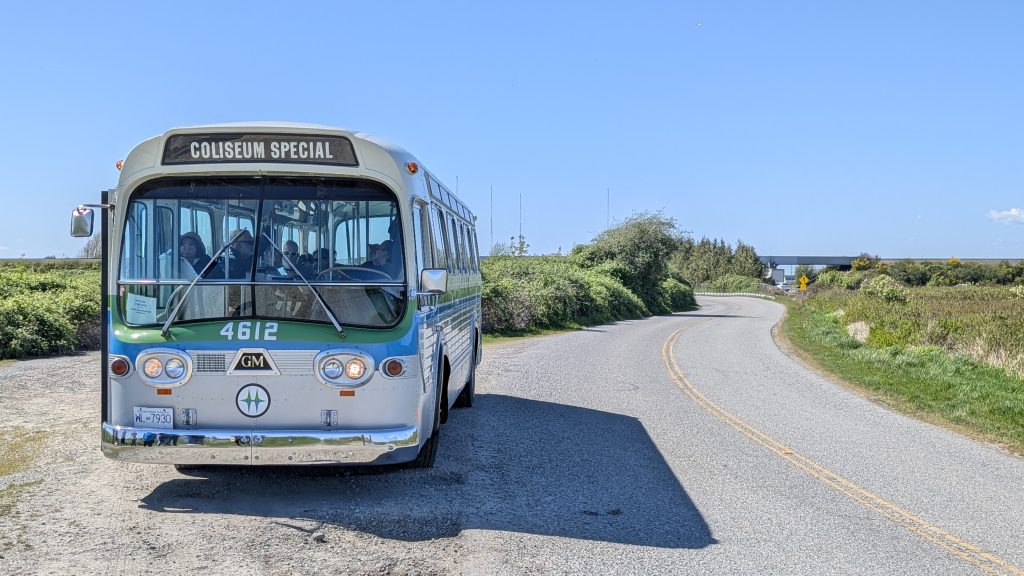
And last Sunday (April 26th) was our “Rails to Rubber” fan-trip aboard 4612. This was organized by Milan Streit, building on the work of Lawrence Walker who had made contact with the Fraser Valley Heritage Rail Society. Some years ago, we donated interurban parts to the FVHRS in return for two dates when we could bring members and the general public to the Cloverdale Station for an interurban ride. We would be able to keep revenue generated. Milan combined this the second such venture with a fan trip to other local sites. We hear that a grand time was had by all – not to mention the FVHRS threw a surprise BBQ for us!

(Photos by Ewen Streit)
Posted on

Farewell, Rhonda

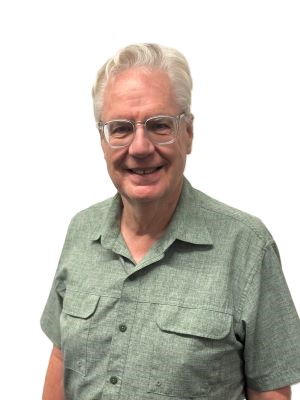
Rhonda Larrabee

On April 4th, TMS member Rhonda Larrabee said “goodbye” to the world.

Rhonda was a long‑time member of the Society and deeply involved in its life. Social events? The BBQ—she helped organize it. Serving food? Yes. The Annual General Meeting? She’d be there, checking off your name and handing you a ballot. Strategy meeting? She would be there too, helping her husband (and TMS President) Bryan organize everyone’s thoughts.

Events with Rhonda in charge—or even just helping—ran like clockwork. Why? Because she knew what had to be done, and then she told anybody standing around what to do. She didn’t ask. She told. (Always in a nice way, and always with a smile.) And you did what she said.

Strong personality? Of course. But she was the Chief of the Qayqayt First Nation.

Getting there, though, took grit, determination, and that strong personality—because the Qayqayt Nation was not supposed to exist. And it would not have, if not for Rhonda.

A smallpox epidemic in 1904 and the increasing encroachment of European settlement along the banks of the Fraser River in New Westminster and Brownsville decimated the band. In 1916, a federal commission closed the reserve and ordered its residents to leave. Then in 1951, the federal government effectively dissolved the band altogether.

Many years later, Rhonda decided to trace her heritage. When she discovered this history, she resolved to have the federal government once again recognize the Qayqayt Nation. It took years, but in 1994 she achieved that goal.

That was not the end of the journey. She then led the Nation down the long and difficult path toward treaty. She had nearly reached that goal when she was taken from her community. Someone else will continue along that path, but Chief Rhonda Larrabee will always be remembered as the person who began the journey.

The Society wishes to express its heartfelt condolences to her husband Bryan, her children, and their families. Our Society will survive Rhonda’s passing, but we are much poorer for her departure.

Thank you, Rhonda, for all you gave to us.
And goodbye.

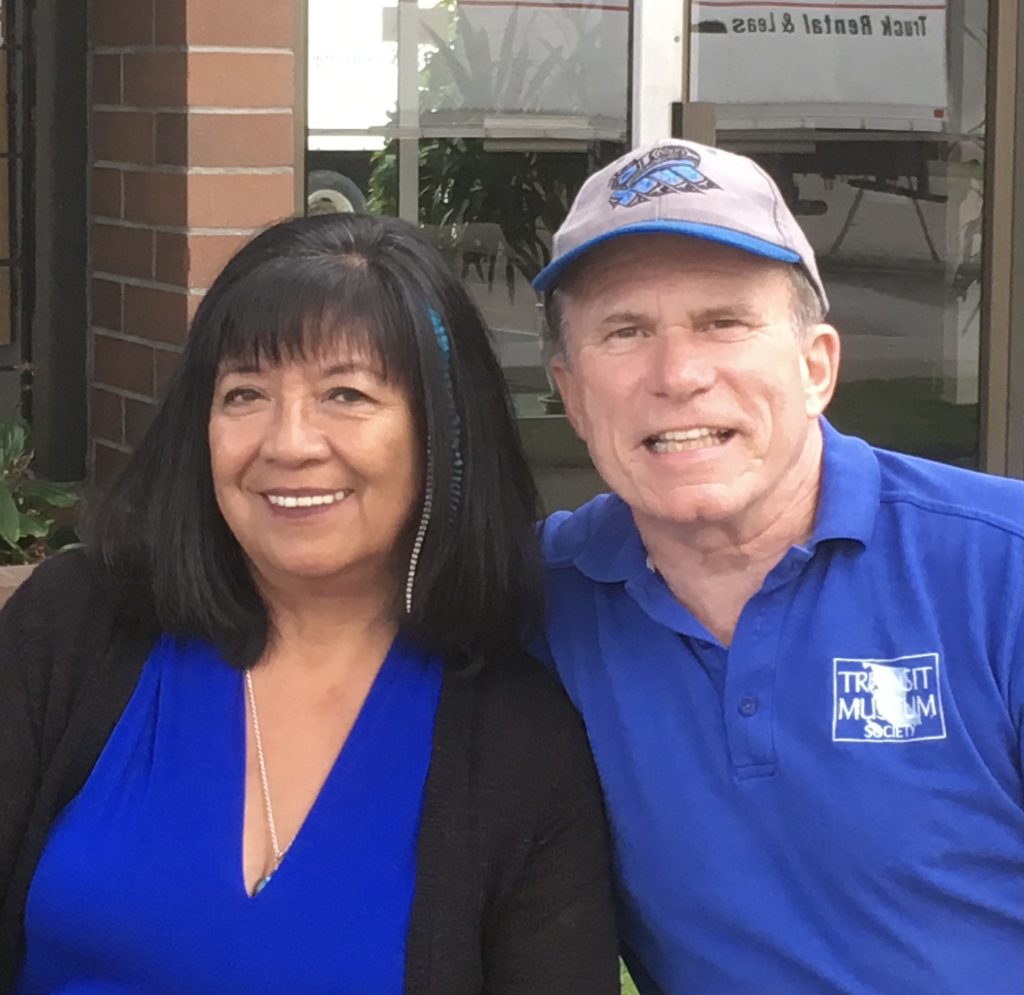
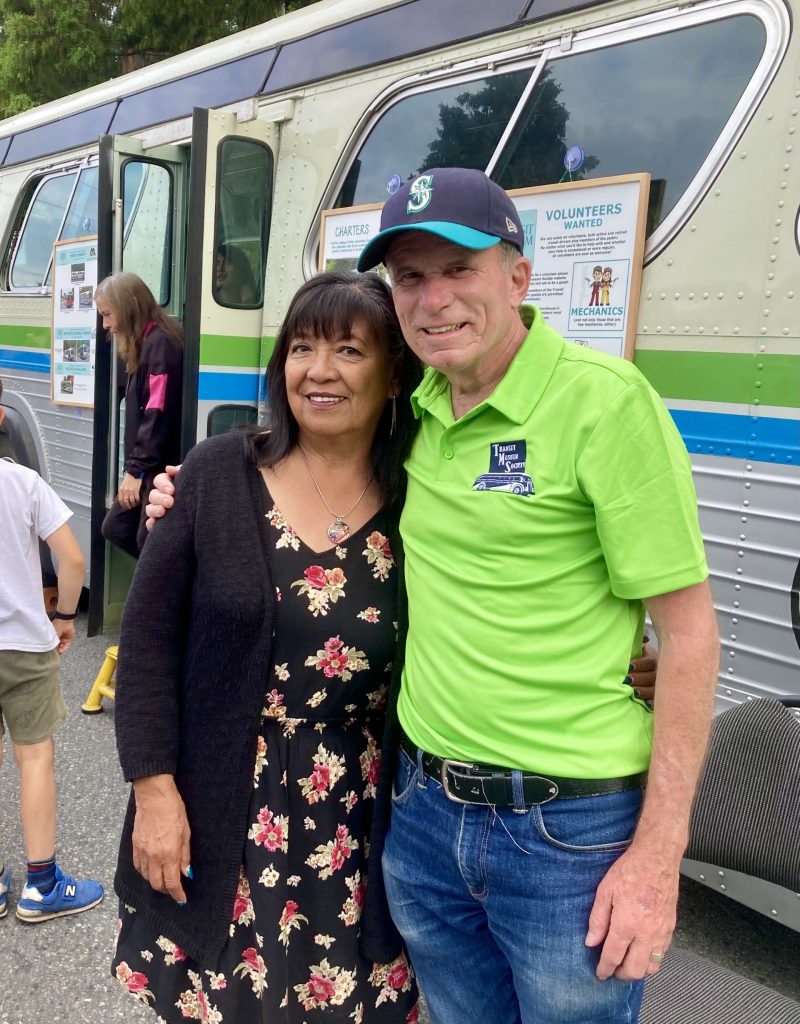
(Photos of Rhonda & Bryan, courtesy Sue Walker)

Posted on

2026-2027 TMS Board & Executive

Later this year we will celebrate our 40th Anniversary. At our recent (6th March) Annual General Meeting, and Director’s Meeting (13th March) our new Board of Directors, Executive and Managers were announced. They will help guide our Society into its next forty years.

The 2025-26 Board was re-elected by acclamation at the AGM.

Bryan Larrabee resumes his role as TMS President, aided by Vice President Michael Taylor-Noonan.

At the March 13th Director’s Meeting (held in camera), the Board appointed various Executive & managerial roles: Jason Sharpe will resume his role as Secretary, Angus McIntyre that of Treasurer, along with the following managerial positions: Charters (Evan Russell), Web, Archives & Newsletter (Michael Taylor-Noonan), Sales (Savannah Dewolf & Sue Walker), Social Media (Milan Streit), & Photo Library (Rob Chew). Membership & Event committees were also formed.

So all aboard! And off we go towards a successful 2026 40th anniversary season!

Posted on

TMS turns 40!

This year the Transit Musuem Society is forty years old!

We thought we’d like to celebrate by offering a specially decorated baseball cap. And to make sure that we have an unforgetable, unique, fantastic design, why not ask our super talented members if they have any ideas for a design! The designer with the winning entry will receive a prize of a free hat with their design embroided on it.

The deadline for entries is March 1st. Entries can either be computer-ready art, or even just a sketch. You can choose to incorporate elements of our logo, or strikeout on your own path. (If you need a copy of our logo in svg form, please just ask the webmaster@transitmuseumsociety.org — send your entry to me too. ) We will pick the winner at a future monthly meeting.

🧢 Standard Embroidery Dimensions for Baseball Caps

⭐ Front Center (most common)

  • Recommended: 2.0–2.25″ high × 2–4″ wide
  • Absolute max: ~2.25″ high × 5″ wide
  • Taller than 2.25″ usually hits the curve of the crown or eyelets.
  • Wider than 5″ starts wrapping too far around the sides.

⚠️ Technical Limits to Keep in Mind

  • Minimum text height: ~3/16″ (0.1875″) to avoid blurring.
  • Cannot embroider on the bill (must be done before hat manufacturing).
  • Avoid placing designs above the eyelets—machines can’t stitch cleanly there.

Get those thinking caps (hats!) on….